About Hzuaneri
A plastic box in the kitchen
It started with a thing we saw every day and wished we did not. A plastic litter tray, beige and functional, sitting where the kitchen met the hallway. There was no door to close and no corner dark enough. The tray did its job. The room did not.
So we built a cabinet that hid it. That was 2016, and that one piece became the first Hzuaneri product.
The rule we took from it
The logic was simple and it stuck. If something you need for an animal has to be hidden, then furniture for it does not exist yet. Someone has to make it, and it has to look like furniture first. A cabinet that happens to hold a litter box, not a litter box that grew doors. That rule still sorts what goes into the Hzuaneri range and what stays out.
A week with the animals
Every new piece starts as a full-size mock-up. Not a sketch, not a rendering, a thing you can walk around and open.
Then a cat and a dog live with it for a week. The cat ignores the opening we thought it would use and finds one we did not. The dog leans against the crate door until we learn where the hinges need to be stronger. We take notes, we adjust, and only then we draw. The Hzuaneri team has done it this way since the first cabinet, and we have not found a faster way that works.
What the lineup looks like now
The range sits at 218 pieces as of this year, spread across nine departments. Prices run from $23.99 for a small shelf to $285.98 for a full dog crate cabinet. The middle sits around a hundred dollars.
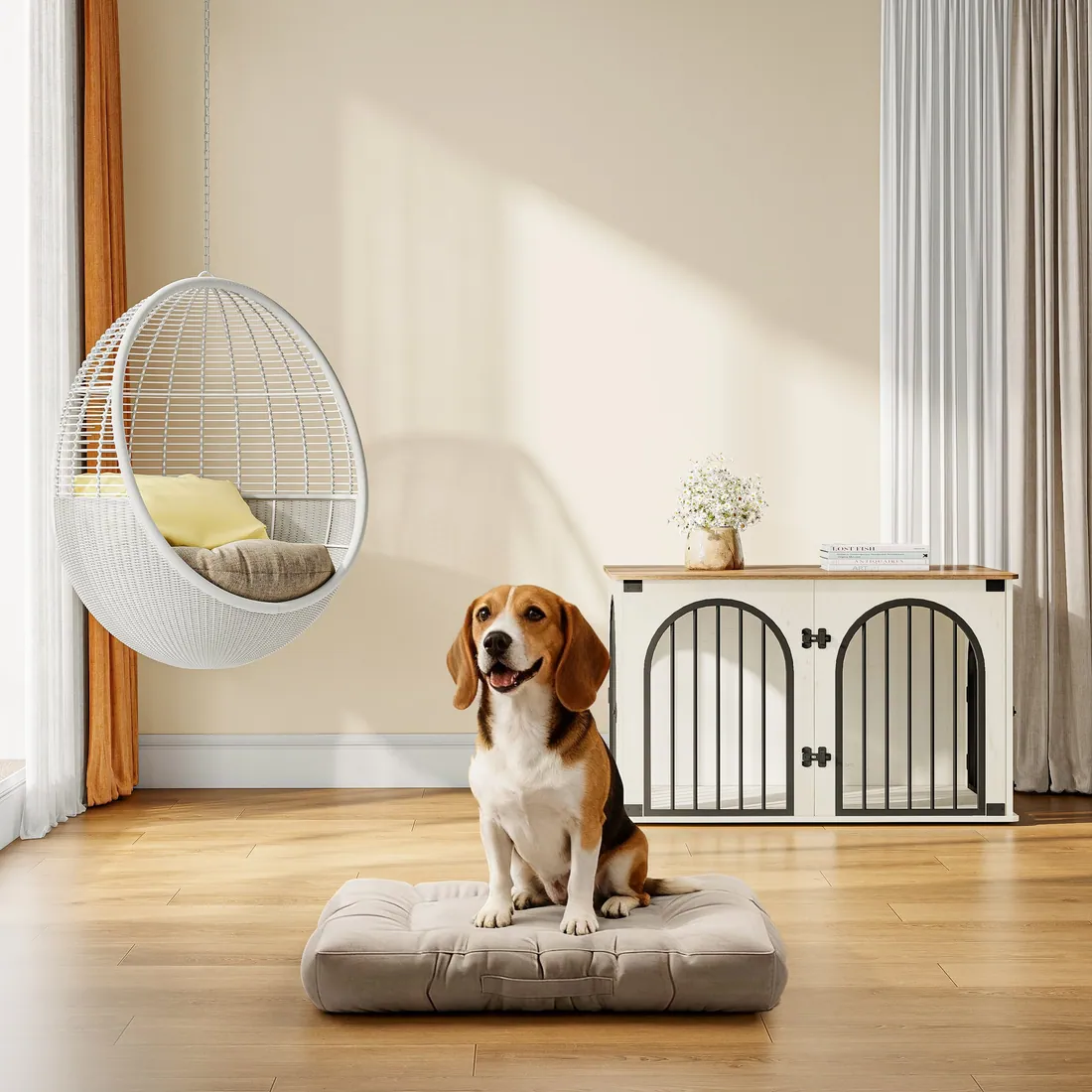
Litter box furniture is the largest group at 46 pieces, from eighteen inches wide for a tight bathroom to thirty-eight inches for a two-cat household. Dog crate furniture comes next, forty-two pieces, twenty-three to eighty-seven inches across.
The rest fills out the rooms people actually live in: bookshelves and ladder shelves, cat trees that reach seven feet, bathroom storage, shoe storage, jewelry armoires, and a few pieces for the bedroom.
Furniture that happens to work
A Hzuaneri cabinet does not announce what is inside it. The litter box enclosure looks like a sideboard. The dog crate reads as a credenza. The cat tree has shelves a person can use. We build for the room first, because the room is where you spend your day. The animal lives in it too, but the furniture does not have to pick sides.
What we do not make
We do not make a piece for every animal need. If a standard shelf already does the job, we leave it alone. If a plastic tray works in a laundry room with a door, you do not need us. The Hzuaneri approach is narrow on purpose: we only build where hiding something ugly and necessary calls for a piece of actual furniture.
How the range grew
After the litter box cabinet came the dog crate that looked like a side table. Then someone asked for a bathroom shelf that could hold a litter box and a towel basket at the same time. Then a jewelry mirror that locked, because a toddler had emptied a drawer of earrings onto the floor. Each addition came from a real room and a real problem. The Hzuaneri workshop keeps a list of them, and the list is longer than our production calendar.
The way we measure
We measure in inches and in what fits. A cabinet for a litter box starts with the tray dimensions and the cat's shoulder height. A dog crate starts with the dog standing, lying flat, and turning around. Then we add the clearance for a person to reach in and clean. The numbers on the page come from that order: animal first, then human, then the room. We at Hzuaneri have not found a reason to change it.
How we describe a pieceEvery figure on a card belongs to that piece: the width, the material, the finish. Public rules are quoted where they apply.